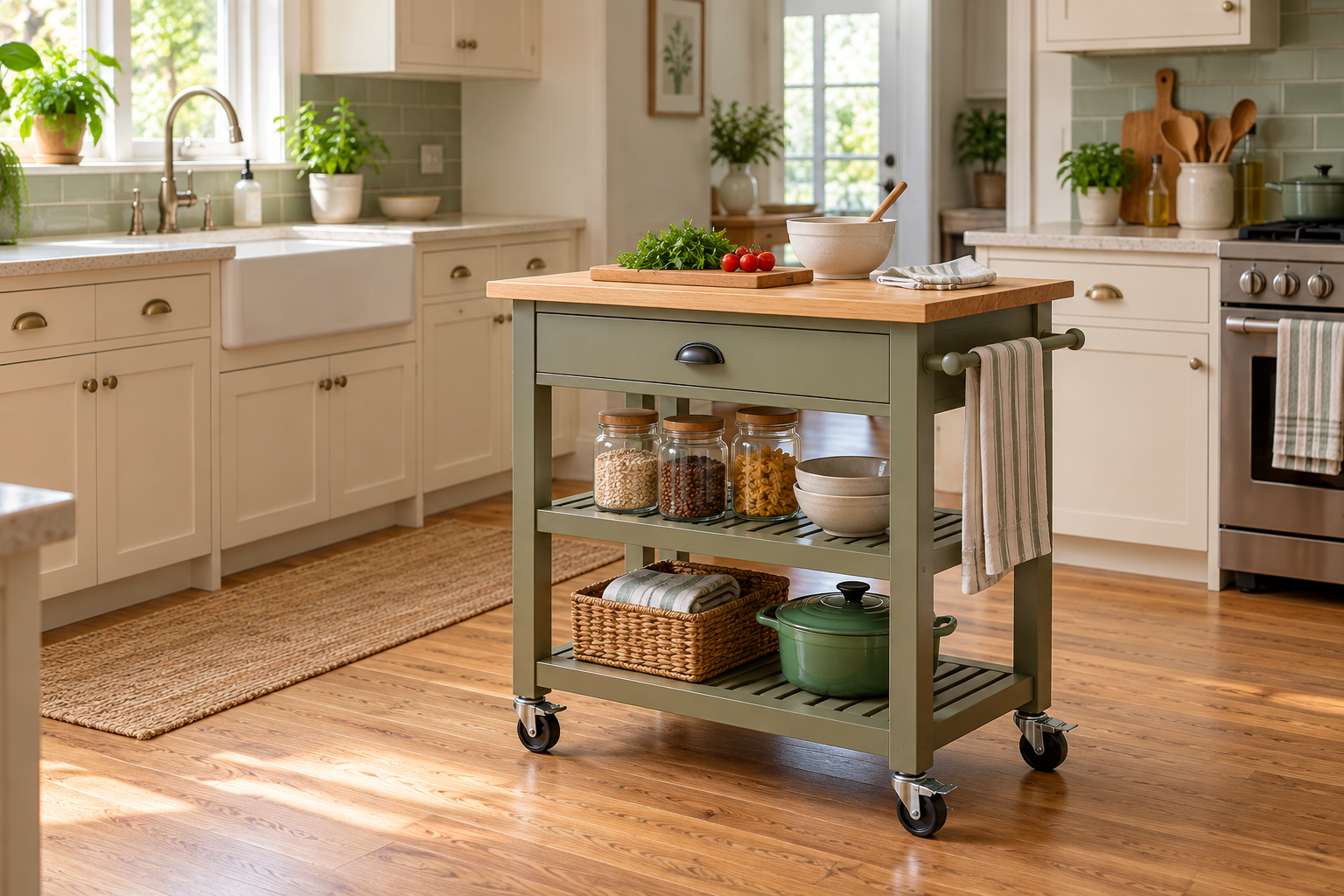
Need more prep space? Start with a cart that has a proper worktop. Need somewhere to store supplies? A compact trolley may be enough. Compare the job before the finish.
Two options, two different needs

IKEA FÖRHÖJA Kitchen Cart
A birch cart with a solid-wood top, drawers, and open shelves. Listed size: 39⅜ × 16⅞ × 35⅜ inches (L × W × H).
Check first: Allow room around its long footprint. The oiled wood top needs care; IKEA recommends re-oiling yearly or as needed.
View at IKEA ↗
IKEA RÅSKOG Utility Cart
A three-tier steel trolley with lockable castors. Listed size: 13¾ × 17¾ × 30⅜ inches (L × W × H), with a 13 lb limit per shelf.
Check first: Storage only: it has no prep worktop, is for indoor use, and is not approved for food contact.
View at IKEA ↗Research-based examples, not hands-on test winners. Product images and specifications: the linked brands. These are regular product links; we earn no commission from them. Checked November 4, 2026. Confirm the exact variant, current price, and delivery at the store.
Choose at a glance
| Your priority | Start with | Main tradeoff |
|---|---|---|
| Extra worktop plus drawers | FÖRHÖJA | Larger footprint and wood-top care |
| Supplies in a tight corner | RÅSKOG | Lower storage trolley, not a prep surface |
| Forceful chopping or kneading | A rigid stationary work surface | Wheel locks alone do not prevent wobble |
Before you buy
- Measure the complete cart and every doorway on its route.
- Open nearby appliances and drawers before committing to a spot.
- Match height, wheels, and load limits to the intended job.
- Check food-contact guidance, surface care, and reachable locks.
Only need the details? Open a topic.
Measure the footprint and the whole route
Mark the full outside dimensions with painter’s tape, including handles, bars, overhangs, and any open leaves. Open the refrigerator, oven, dishwasher, cabinets, and drawers, then walk through normally. Measure narrow doorways, hallway turns, thresholds, and the parked space. Keep a usable aisle for your household rather than treating a product that barely fits as a practical fit.
Check height, wheels, and stability
Include casters in the working height and try a comparable height before buying. Small hard wheels can catch on grout, rugs, or thresholds. Check that brakes remain reachable when loaded. A wheel brake mainly stops rolling; loose hardware, frame flex, and uneven floors can still cause wobble. Keep heavy items low and avoid overloading an extended leaf or hanging weight from one side.
Choose a top and storage you can maintain
Wood may need oiling and prompt drying; stainless steel shows scratches and fingerprints; laminate edges need protection from moisture. Confirm food-contact guidance instead of assuming every top is a cutting board. Measure the tallest stored item and check drawer travel. Open shelves are easy to reach but show clutter; bins and shelf edges help contain items when moving.
Run a ten-minute test after assembly
Roll the empty cart along its route. Lock the wheels and press gently at each corner. Open nearby appliance doors. Load heavy items low, then repeat the movement and braking test. Follow the manufacturer’s load limits and retightening guidance. If the cart blocks a safe route or will never move, fixed shelving or a sturdy cabinet may use the space better.