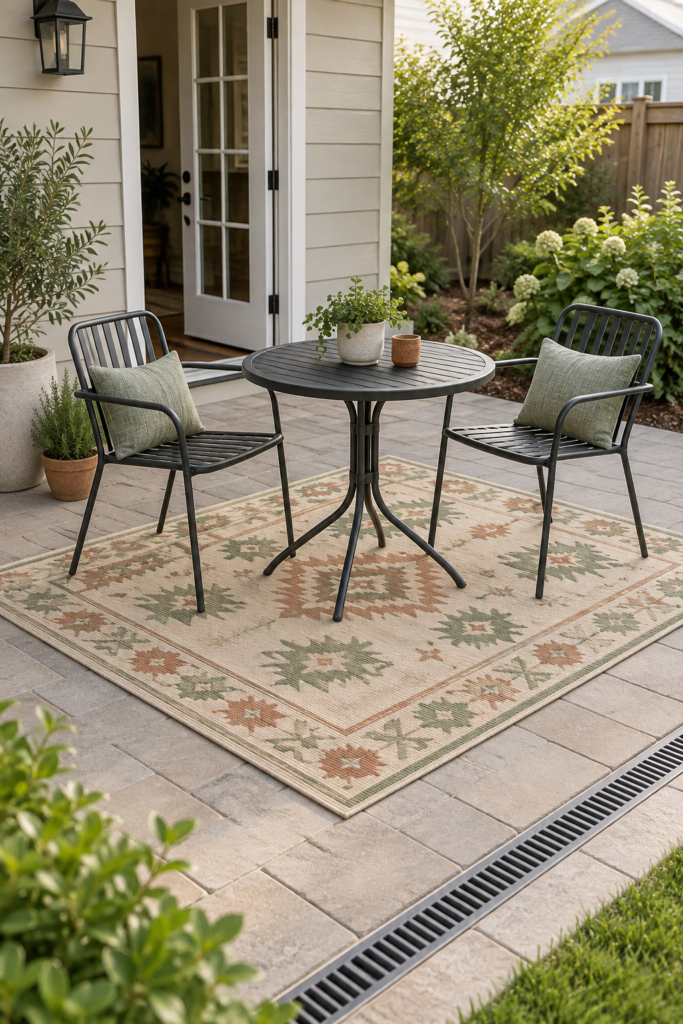
An outdoor rug can make a small patio feel more defined and comfortable. It can visually connect a table and chairs, soften a hard surface, and introduce color without adding another piece of furniture.
It can also create problems if it blocks a door, catches a chair leg, traps moisture, covers drainage, or leaves a curled edge in the walking route.
Choose the furniture layout first. Then select a rug that supports how the patio works. Size, drainage, drying, surface compatibility, and maintenance matter more than finding the perfect pattern.
Quick Answer: What Should You Look for in a Small Patio Rug?
Check these eight factors:
- Furniture layout: dining, bistro, lounge, or an open sitting area.
- Usable rug size: large enough to support movement without blocking the patio.
- Door clearance: the door must open without dragging across the rug.
- Drainage: water needs a route away from both the rug and the surface below.
- Outdoor suitability: use the manufacturer’s intended location and exposure.
- Texture and stability: chair legs, feet, and mobility aids should move predictably.
- Cleaning and drying: the household must be able to lift, clean, and dry it.
- Storage: the rolled or folded rug needs a suitable off-season location if required.
An outdoor rug is practical when it defines the seating zone without making the patio harder to walk through, clean, or dry.
Plan the Furniture Before the Rug
Do not begin with an attractive rug size and force the furniture to fit it. Start by arranging the furniture around the patio’s fixed features.
Mark:
- Door and gate swings.
- Steps and changes in level.
- The main walking route.
- Railings, posts, walls, and planters.
- Drains, downspouts, and low areas where water collects.
- Grill and utility zones.
- The furniture in its full working position.
If the furniture layout is not final, work through our patio furniture for small spaces guide first. For a two-chair dining zone, the small outdoor bistro set guide explains how to include seated people and chair movement in the footprint.
Once the layout works without a rug, identify the floor area that can be covered without interfering with those functions.
Choose a Rug Layout That Matches the Activity
The right rug relationship depends on how the furniture moves.
Bistro Table and Two Chairs
For a dining setup, the rug must account for chairs pulled away from the table. A rug that ends directly behind the chair legs may catch them whenever someone sits or stands.
Mock up both chairs in their in-use positions. Mark the furthest practical movement, not only the neatly tucked position shown in a photograph.
If the patio cannot accommodate a rug beyond that movement, a smaller decorative mat placed away from the chairs—or no rug—may function better.
Small Dining Set
A dining rug should support the approved chair layout without forcing users to lift a chair over the rug edge during normal movement.
Consider the table legs as well. A thick texture or uneven transition can make a lightweight table feel less stable. Follow the furniture and rug manufacturers’ surface guidance.
Lounge Chairs and a Side Table
A rug can sit beneath all furniture legs or support only the front portions of lounge chairs, depending on the product, surface, and stability of the arrangement.
Test the setup physically. A partial placement should not cause rocking, create an uneven seat, or put a small table at risk of tipping.
A Bench or Wall-Side Seat
A narrow runner or rectangular rug may define the area without covering the entire patio. Keep the rug out of door swings and the main path.
Folding Furniture
Folding feet and frames can catch rug edges during setup. Include the operating area, not just the final arrangement. Our folding patio furniture guide covers open, operating, and stored footprints.
Measure the Rug With Painter’s Tape
Product photos can make a rug look larger or smaller than it is. Build a full-size outline on the patio using painter’s tape that is appropriate for the surface, or use removable markers that will not damage it.
Check the layout in four states:
- Furniture tucked in.
- Furniture in normal use.
- Chairs pulled out.
- Door and walkway in full use.
Walk every route. Carry a tray. Pull out each chair. Open every door and gate. Make sure the rug does not create a narrow strip of exposed floor that is difficult to step over or clean.
Record the maximum rug length and width that work—not the dimensions you hope will fit.
Check Door and Threshold Clearance
Measure the gap beneath doors at the point where they pass over the rug. Include any rug pad or gripping layer permitted by the manufacturers.
Check:
- Exterior door sweep or weather seal.
- Threshold height.
- Rug thickness and edge construction.
- Whether the surface or door changes with heat or moisture.
- Whether the rug could slide into the door’s path.
A door that brushes the rug can push it into a fold or curled edge. Do not trim a door, remove a safety feature, or alter the rug based on a generic decorating rule. Choose a compatible product or keep the rug outside the door swing.
Put Drainage Before Pattern
Outdoor rugs get wet from rain, irrigation, cleaning, spills, condensation, or runoff. Both the rug and the surface beneath it must be able to drain and dry.
Before buying, observe the patio during or after rain when safe to do so.
Look for:
- Water flowing toward a drain.
- Low spots and puddles.
- Downspout discharge.
- Irrigation overspray.
- Shade that slows drying.
- Debris collecting at edges.
- Seams or boards where water must escape.
Do not cover a drain or create a barrier across the intended water route. A rug that stays wet or conceals moisture may contribute to staining, odor, surface damage, biological growth, or slippery conditions.
No outdoor rug should be described as universally mold-proof. Performance depends on material, construction, cleanliness, moisture, airflow, and the surface below.
Check the Patio Surface
The same rug can behave differently on concrete, wood, composite decking, tile, or pavers.
Concrete
Concrete can be rough, porous, or uneven. Check whether the rug backing and any pad are suitable for the surface and outdoor conditions. Moisture can remain beneath a rug even when the top feels dry.
Pavers
Joints and height differences may affect chair movement and rug wear. Confirm the rug lies flat and does not hide a trip point that should be repaired.
Tile
Smooth tile can become slippery when wet. Check product instructions for grip, backing, and surface compatibility. Do not assume a rug pad is suitable simply because it is sold for indoor floors.
Wood Decking
Water and debris need to move away from the boards. Review the decking and rug manufacturers’ guidance for discoloration, airflow, coatings, heat, and compatible backing materials.
Composite Decking
Follow the deck manufacturer’s instructions about mats, rubber or latex components, heat, staining, and cleaning products. Material compatibility varies.
If either manufacturer warns against the planned combination, choose a different rug or leave the surface uncovered.
Understand Common Outdoor Rug Materials
Material names are only a starting point. Construction, weave, backing, dyes, finishing, and care requirements vary by product.
Polypropylene and Other Synthetic Fibers
Synthetic outdoor rugs are common because many are designed to handle moisture and routine cleaning. Check the exact product’s outdoor rating, UV claims, backing, cleaning method, drying instructions, and temperature limitations.
“Water-resistant” does not mean water cannot remain under the rug. “Fade-resistant” does not mean the color can never change.
Recycled Plastic Mats
Woven plastic mats can be light and easy to move, depending on construction. Check whether the material becomes hot, how edges behave, whether it slides, how it should be secured, and whether folds or creases relax.
Polyester and Blended Fibers
Performance depends on the complete construction. Review stain, UV, moisture, backing, and cleaning information rather than treating the fiber name as a guarantee.
Natural-Fiber-Look Rugs
A rug may resemble jute, sisal, or another natural texture while using synthetic material. Confirm the actual fiber content and intended exposure. A visual style does not establish outdoor suitability.
Natural Fibers
Some natural fibers may not suit uncovered, frequently wet patios. Use only products specifically intended for the planned location and follow their exposure and care instructions.
Consider Texture, Bare Feet, and Chair Movement
Texture affects more than appearance.
A heavily textured rug may feel pleasant under bare feet but make small chair feet harder to move. A very smooth surface may be easier to clean but offer less grip in some conditions.
Check:
- Pile or weave height.
- Edge thickness.
- Openings that could catch narrow legs, heels, or mobility aids.
- Comfort under bare feet.
- Whether fibers become rough, hot, or slippery when wet.
- How easily crumbs and leaves can be removed.
If anyone in the household uses a cane, walker, wheelchair, or has limited balance, prioritize a flat, secure transition and clear route. Product choice may need professional accessibility guidance for the individual situation.
Prevent Sliding, Curling, and Raised Edges
A rug that moves or curls can become a trip hazard.
Follow the rug manufacturer’s instructions for flattening, placement, pads, anchors, and compatible surfaces. If a separate rug pad is used, it must be intended for outdoor use and compatible with both the rug and patio surface.
Do not improvise with indoor tape, adhesives, fasteners, or weights. They may fail outdoors, damage the surface, block drainage, or create another obstacle.
Inspect the rug regularly for:
- Curling corners.
- Ripples and folds.
- Movement after rain or wind.
- Worn or unraveling edges.
- Backing deterioration.
- Debris beneath the rug.
Stop using a rug if it cannot lie securely and safely in the planned location.
Think About Sun and Heat
Direct sun can affect color, surface temperature, backing, and the patio beneath the rug.
Observe when the area receives sun and for how long. Dark colors may become hotter than expected. A rug can also shade the floor unevenly, so the uncovered surface may weather differently over time.
Check the product’s UV and temperature guidance, but avoid absolute claims. Even products marketed for outdoor use can change with exposure.
If the patio becomes hot, test the rug cautiously before walking barefoot or allowing children and pets onto it.
Plan Cleaning Before You Buy
A rug may look easy to clean until it is wet, heavy, and too large to move.
Review the manufacturer’s care instructions and ask:
- Can debris be swept, shaken, or vacuumed?
- Is rinsing allowed?
- Which cleaning products are permitted?
- Can the rug be lifted by one person when wet?
- Where can it dry flat or according to instructions?
- How long is the patio unavailable during cleaning?
- Can both the rug and floor be cleaned and dried separately?
Avoid pressure washing, bleach, strong chemicals, heat, or machine washing unless the manufacturer specifically permits them.
Lift the rug periodically as directed to remove debris and inspect the surface beneath it. A clean top does not prove the underside is clean or dry.
Plan Seasonal Storage
If the rug must be stored during winter, storms, or long periods of non-use, measure it in the required storage condition.
Check whether it should be rolled or folded. Rolling diameter can be much larger than expected, and a long rug may not turn through a hallway or fit upright in a closet.
Before storage:
- Clean according to the instructions.
- Allow it to dry completely.
- Roll or fold only as directed.
- Protect it from moisture, pests, and sharp objects.
- Avoid unstable overhead storage.
- Label the outer wrap if the pattern and size are not visible.
If storage is already tight, choose a size and construction that one person can realistically manage.
Coordinate the Rug With Shade and Lighting
An umbrella base can distort a rug or make cleaning difficult. Plan the small patio umbrella footprint before placing the rug. Follow both manufacturers’ guidance rather than cutting a hole or altering either product.
For evening use, ensure rug edges and level changes remain visible. Lighting should reveal the route without creating glare. Our cozy backyard lighting ideas guide explains how to layer path, task, and ambient light.
Accessories should support the same layout. They should not gradually fill the walkway that the original furniture plan protected.
Outdoor Rug Buying Checklist
- [ ] Furniture placement is final before selecting the rug.
- [ ] The rug outline has been mocked up at full size.
- [ ] Chairs can move without catching an edge.
- [ ] Doors and gates open completely.
- [ ] The main walkway remains clear and predictable.
- [ ] Drains and water routes remain open.
- [ ] The rug is intended for the planned outdoor exposure.
- [ ] Rug, backing, pad, and patio surface are compatible.
- [ ] Texture works with feet, chair legs, and mobility needs.
- [ ] Curling, sliding, and edge risks can be managed according to instructions.
- [ ] Sun and surface temperature have been considered.
- [ ] The rug can be lifted, cleaned, and dried realistically.
- [ ] The surface beneath it can be inspected and cleaned.
- [ ] Rolled or folded storage dimensions fit the available location.
- [ ] Return rules are understood before outdoor use.
Common Mistakes to Avoid
Choosing the Rug Before the Furniture
The rug should support the working layout, not dictate an arrangement that blocks the patio.
Measuring Only the Tucked-In Chairs
Dining chairs need space to move while remaining supported by a safe, stable surface.
Blocking a Drain
Keep drainage paths and access points clear.
Assuming Outdoor Means Waterproof
Water can pass through, remain within, or collect beneath an outdoor rug.
Using an Indoor Rug Pad Outside
Use only products intended and approved for the rug, surface, and outdoor conditions.
Ignoring the Wet Weight
A large wet rug may be difficult for one person to lift and dry.
Hiding a Damaged Surface
A rug should not conceal a loose paver, rotten board, severe crack, or other condition that needs attention.
Leaving Curled Edges Unchecked
If the rug will not lie securely according to its instructions, remove it from the route.
Frequently Asked Questions
What size outdoor rug is best for a small patio?
The best size is the largest one that supports the intended furniture movement without blocking doors, drains, or walkways. Mock up candidate dimensions with painter’s tape before buying.
Should all patio furniture legs sit on the rug?
That depends on the furniture type, stability, rug construction, and manufacturer guidance. Dining chairs usually need consistent support throughout normal movement. A lounge arrangement may use a different relationship, but it should not rock or create uneven seating.
Can an outdoor rug stay outside in the rain?
Only within the exposure and care conditions stated for that product. The rug and patio still need to drain and dry. Check beneath it regularly and follow storage guidance during severe or seasonal weather.
Do outdoor rugs damage decks or concrete?
An incompatible backing, trapped moisture, dirt, chemicals, heat, or uneven weathering may affect the surface. Follow both the rug and surface manufacturer’s instructions and inspect beneath the rug regularly.
Do I need a rug pad outdoors?
Use one only when it is recommended or permitted and specifically compatible with outdoor use, the rug, and the patio surface. A pad can also change thickness, door clearance, drainage, and drying.
How do I stop an outdoor rug from blowing or sliding?
Follow the rug manufacturer’s approved placement and securing methods. Do not improvise with adhesives, fasteners, or heavy objects. If the rug cannot remain secure in the location and conditions, remove it.
How often should I clean beneath an outdoor rug?
Use the manufacturer’s care schedule and inspect more often after heavy rain, spills, leaf fall, or visible movement. Climate, shade, drainage, and debris levels vary too much for one universal interval.
Let the Patio Work First and Look Finished Second
An outdoor rug should make a small patio feel more coherent without interfering with the way people move, sit, clean, and manage water.
Arrange the furniture first. Measure chair movement, doors, routes, and drainage. Then compare outdoor suitability, texture, surface compatibility, cleaning, drying, and storage.
The right result may be a larger rug that fully supports the furniture, a narrow rug outside the chair zone, or no rug at all. A functional uncovered surface is better than a decorative layer that stays wet or creates a trip edge.
Once the floor plan is settled, coordinate it with your small-space patio furniture layout and lighting plan rather than adding accessories one by one without rechecking the route.